About The Body of Knowledge Institute
- Positive Psychology integrated education
- Regulation-first, evidence-aligned support
- Whole-school learning and culture change
- Practical strategies for educators, leaders and families
Enquire About Our Programs Today!
Our Philosophy: Regulated Learning is Embodied Learning
At The Body of Knowledge Institute, we believe that when the body is engaged, the brain is more available for learning. We move beyond traditional, “desk-bound” educational models to embrace a neuro-somatic approach. Our mission is to help schools and educators create environments where learning is not just a cognitive act, but a physical, relational, and neurobiological experience.
Our work is dedicated to helping principals, teachers, and parents navigate the complexities of modern education, specifically trauma, neurodiversity, and student disengagement, through the lens of neuroscience and purposeful regulation.

Positive Psychology Integrated Education
The Body of Knowledge Institute exists to address a critical gap in modern education. Many teachers have not been trained in how the developing brain actually learns, regulates, and responds to stress, trauma and dysregulation. As a result, classrooms can become unsettled, behaviour can be misread as defiance, and both students and teachers can operate in states that undermine learning, safety and wellbeing.
Grounded in contemporary neuroscience, trauma-informed practice and somatic science, The Body of Knowledge Institute reframes behaviour as communication and learning readiness as a neurological state. This work supports educators to understand how the growing brain develops, how stress and trauma can affect attention, memory and behaviour, and how to recognise dysregulation in real classroom contexts.
Most importantly, it equips teachers with practical skills in re-regulation and co-regulation, because calm, embodied teaching practice is not a soft skill. It is central to creating safer, more focused and more connected learning environments.
Meet Lara Thompson
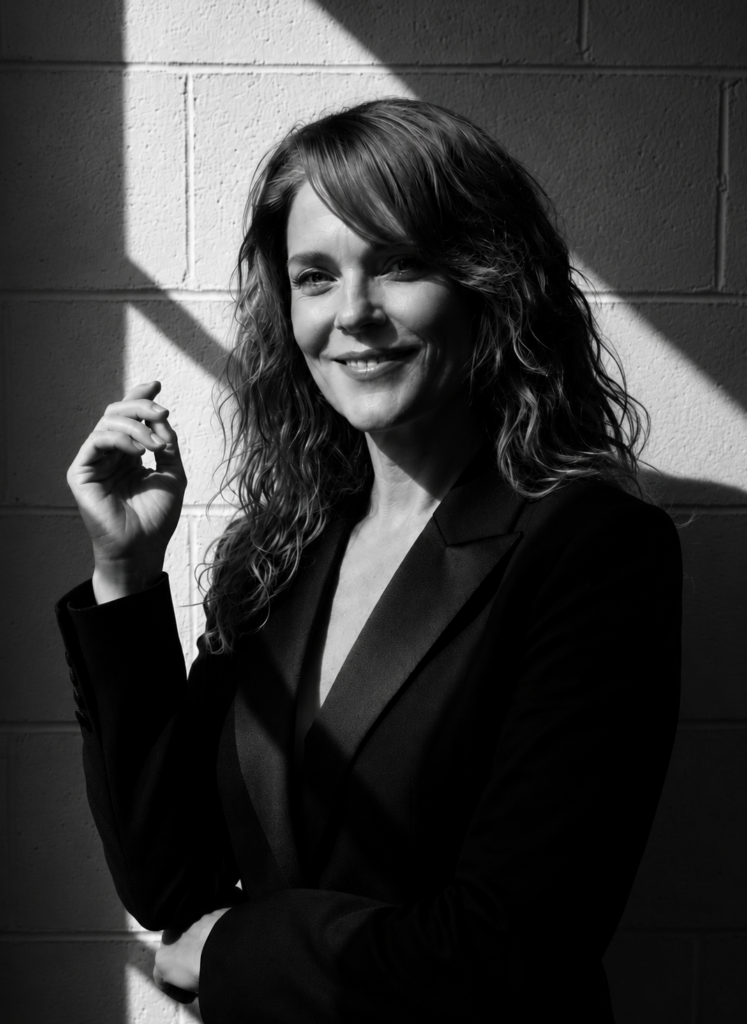
Lara Thompson has spent more than two decades working at the intersection of movement, regulation and human development. Her work began not as theory, but as lived experience. Growing up in a dysregulated environment, Lara instinctively turned to movement as a way to restore coherence and calm. That early understanding became the foundation of a professional path spanning dance therapy, education and student wellbeing.
Across more than 20 years of practice, Lara’s experience has been shaped through diverse roles in education and wellbeing settings.
Dance Therapist
Educational Leader
Tertiary Lecturer
Lecturing at Monash University and teaching Master of Education students how to integrate arts-based and embodied pedagogy into classroom practice.
Lara’s work brings together trauma-informed education, Positive Psychology, nervous system regulation and embodied learning to help teachers respond to behaviour with more calm, curiosity and clarity.
Qualifications & Professional Excellence
Academic Qualifications
- Master of Education (Student Wellbeing)
- Diploma of Positive Psychology & Wellbeing (current candidate)
- Diploma of Counselling – Australian Institute of Counselling
- Post Graduate Dance Movement Therapy – University of Melbourne
- Post Graduate Education (Primary/Secondary) – Deakin University.
- Post Graduate Choreography – Victorian College of the Arts
- Certificate IV in Training and Assessment (updated 2023)
Leadership & Specialised Certifications
- Berry Street Education Model Leadership Masterclass & Strategic Classroom Practices
- Youth Mental Health First Aid (2025)
- Generation Next (2021)
- Restorative Practice training with Kirsty Elliot and Adam Voigt
- Geelong Grammar Institute of Positive Psychology & PERMA Framework certification
- Specialised training in Neurodiverse Differentiated Delivery and Inclusive Practices
About The Institute
The Body of Knowledge Institute is a Positive Psychology-informed education and wellbeing consultancy dedicated to supporting the growth, development and flourishing of young people and the systems that shape them.
This work supports schools, educators, families and individuals to build a deeper understanding of how people think, feel, behave and grow, and how to create environments where individuals feel safe, connected, capable and able to thrive.
Rather than treating wellbeing as a separate initiative, the Institute brings together regulation, behaviour, identity, learning and relationships in a way that can be applied in everyday educational practice.
Brain-Body Stress Loop
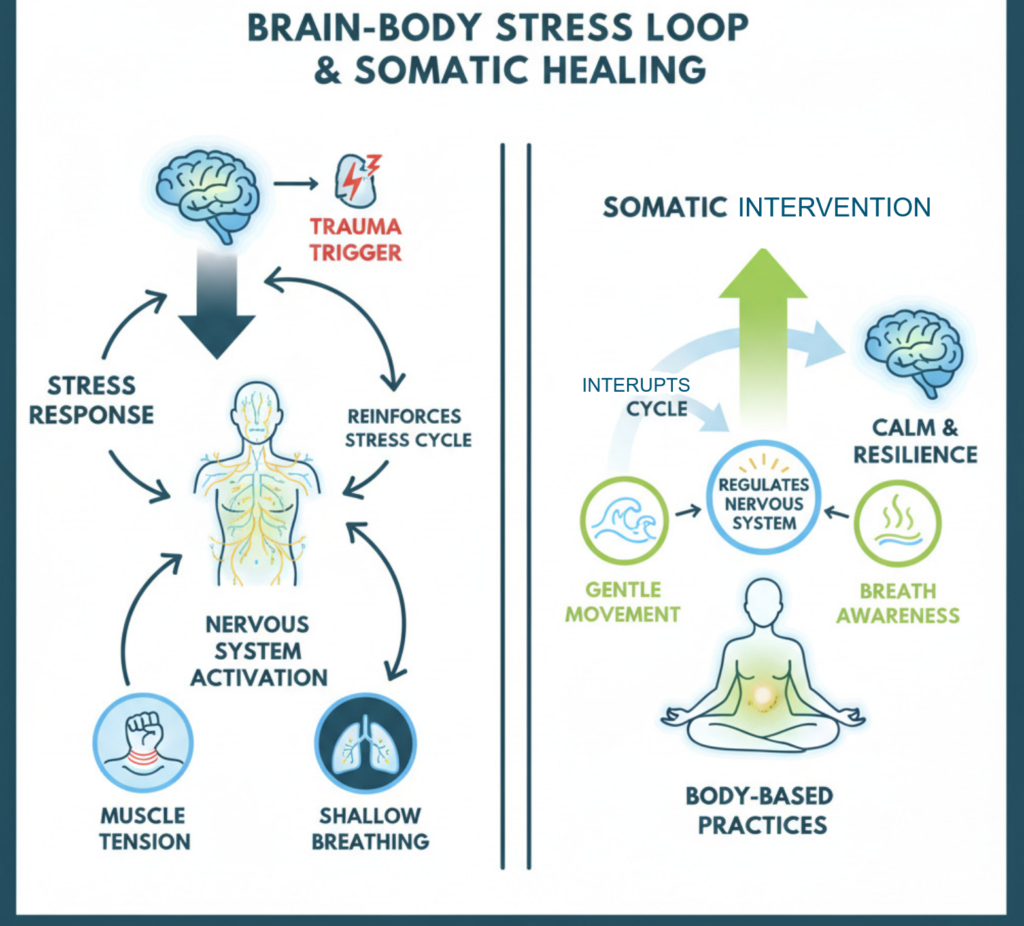
Moving and physically connecting with ideas through the body when learning naturally calms and regulates the nervous system.
Some learners are trying to calm their nervous systems = Regulate – by swinging on chairs, chewing gum or moving around the room.
This is not ‘rude, disobedient behaviour… this is a dysregulated nervous system. This student is communicating to the teacher “I am not in my body and not yet able to learn’.
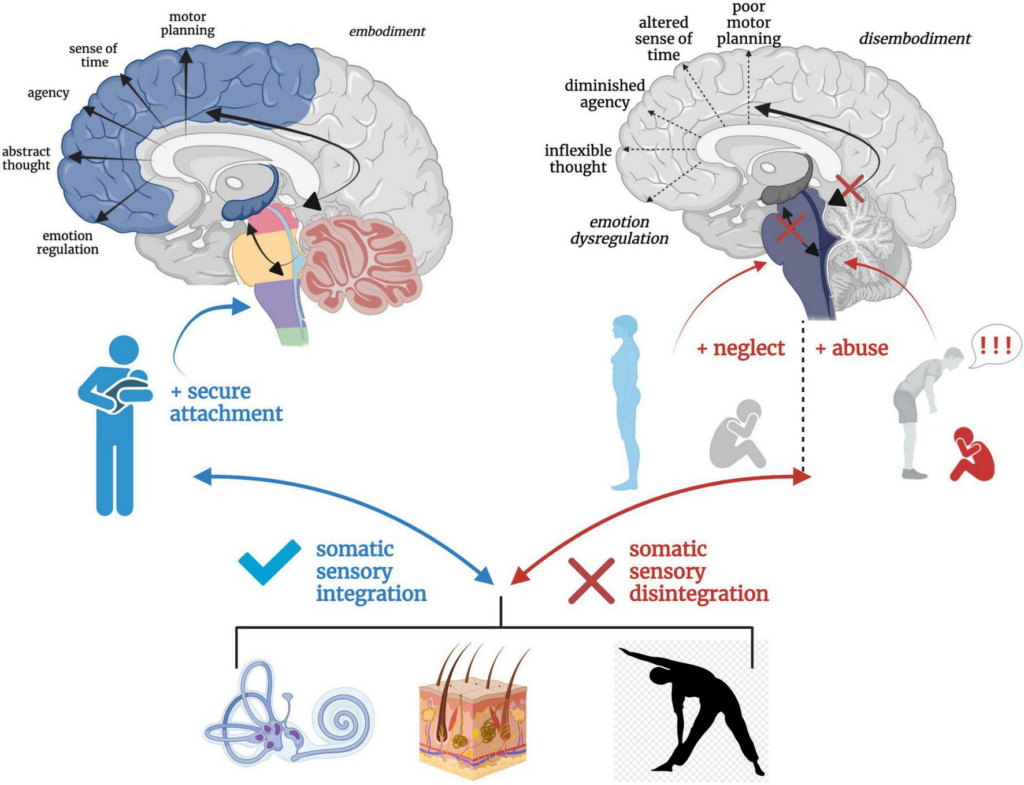
Good versus Poor Somatic Sensory
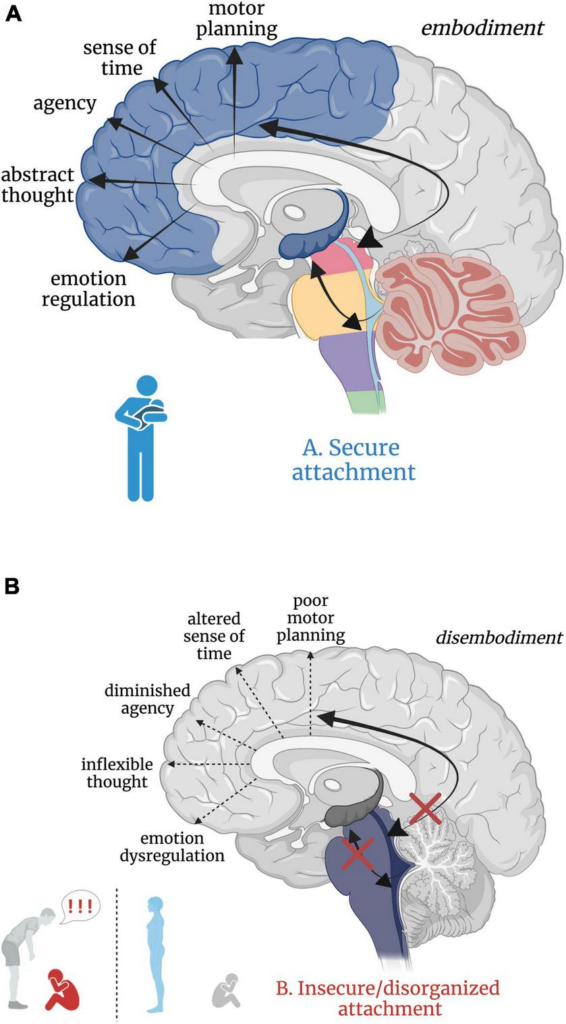
(A,B) Good versus poor somatic sensory integration during development with a secure versus insecure attachment figure, respectively. (A) Healthy brainstem level multisensory integration as a result of attuned, nurturing, somatic sensory-rich caregiving provides the foundation for higher-order limbic and cortical capacities. (B) An overwhelmed or malnourished brainstem due to abusive or neglectful caregiving. The child does not receive comforting touch or attuned rhythmical movement with a safe affective caregiver. Somatic sensory experiences are paired with unsafe or insecure attachment relationships, which has cascading aversive effects on higher-order limbic and cortical capacities.
A hierarchical schematic of how somatic sensory systems, mediated by early attachment patterning, provide a foundation for vertical and horizontal integration in the brain. Vestibular, tactile and proprioceptive input drive healthy neurodevelopmental processes and the development of emotion regulation, motor planning, sense of time, agency, and a sense of embodiment when scaffolded by an attuned, secure attachment figure. However, a paucity or lack of safe and nourishing somatic sensory experiences interacting with contexts of abuse and/or neglect results in overwhelmed, fragmented and disintegrated brainstem-level sensory integration, which has cascading effects on higher order capacities of limbic and cortical brain regions.

Our Purpose
The purpose of The Body of Knowledge Institute is to bring clarity to what many schools and families are experiencing:
- Rising behavioural complexity
- Student disengagement and lack of direction
- Increasing pressure on educators
- Wellbeing approaches that feel fragmented or ineffective
These challenges are not seen simply as behaviour issues. They reflect a deeper need for understanding human development, emotional regulation, identity formation and the conditions that support genuine learning.
Our Approach
Through whole-school professional learning, leadership alignment, curriculum design and movement-based pedagogy, The Body of Knowledge Institute translates brain science into daily educational practice.
- This work focuses on helping people build:
- Positive mindset and self-belief
- Confidence, identity and sense of purpose
- Belonging and positive relationships
- Self-awareness, accountability and emotional regulation
Educators are supported to understand behaviour more accurately, recognise dysregulation earlier, and respond in ways that create calmer, safer and more connected learning environments. Schools are given a practical, evidence-aligned framework to embed regulation into learning, strengthen relationships and shift culture without adding another disconnected initiative on top.

What Makes This Work Different
The Body of Knowledge Institute does not offer one-size-fits-all programs. Every school, educator and community is different, and each engagement is shaped around that context.
This work:
- Supports leadership, staff, classrooms and families
- Aligns wellbeing with everyday practice, not as an add-on
- Focuses on practical, sustainable strategies
- Builds shared understanding across the wider community
- Strengthens what is already in place while addressing gaps with clarity
The result is a more connected approach to learning, behaviour, wellbeing and culture.
Who We Work With

Schools and education systems

Teachers and educators

Adolescents and families
Our Impact
When this work is embedded, schools and individuals can experience:
- Calmer and more predictable environments
- Stronger relationships and greater belonging
- Increased confidence and clarity in staff and students
- Improved engagement, behaviour and learning outcomes
- A shared culture where people can genuinely grow and flourish
Frequently Asked Questions
What is The Body of Knowledge Institute?
The Body of Knowledge Institute is a Positive Psychology-informed education and wellbeing consultancy supporting schools, educators, families and individuals through regulation, neuroscience, trauma-informed practice and embodied learning.
Who is Lara Thompson?
Lara Thompson is the Founder and Lead Practitioner of The Body of Knowledge Institute. Her background spans dance therapy, education, student wellbeing, tertiary teaching and trauma-informed practice.
What makes this approach different?
It brings together Positive Psychology, neuroscience, nervous system regulation and practical educational application, so wellbeing is embedded into daily practice rather than treated as a separate program.
Is the Institute only for schools?
No. While schools and educators are a major focus, the work also supports leadership teams, families and young people.
What kind of support is offered?
Support can include professional learning, consulting, curriculum design, leadership alignment, movement-based pedagogy and practical strategies for regulation and classroom culture.
Connect With The Body of Knowledge Institute
The Body of Knowledge Institute exists to help people understand that growth is not random.
It is shaped by relationships, nervous system safety, identity, environment, language, movement and meaning.
When Positive Psychology is integrated with regulation, neuroscience and embodied learning, it becomes a powerful force for change, not only for individuals, but for classrooms, families and whole systems.
This is how we build spaces where people feel safe, calm, connected and capable.
This is how we build environments where learning and wellbeing can truly work together.